
Know what you're walking into
GRE, at a glance.
Format (2026)
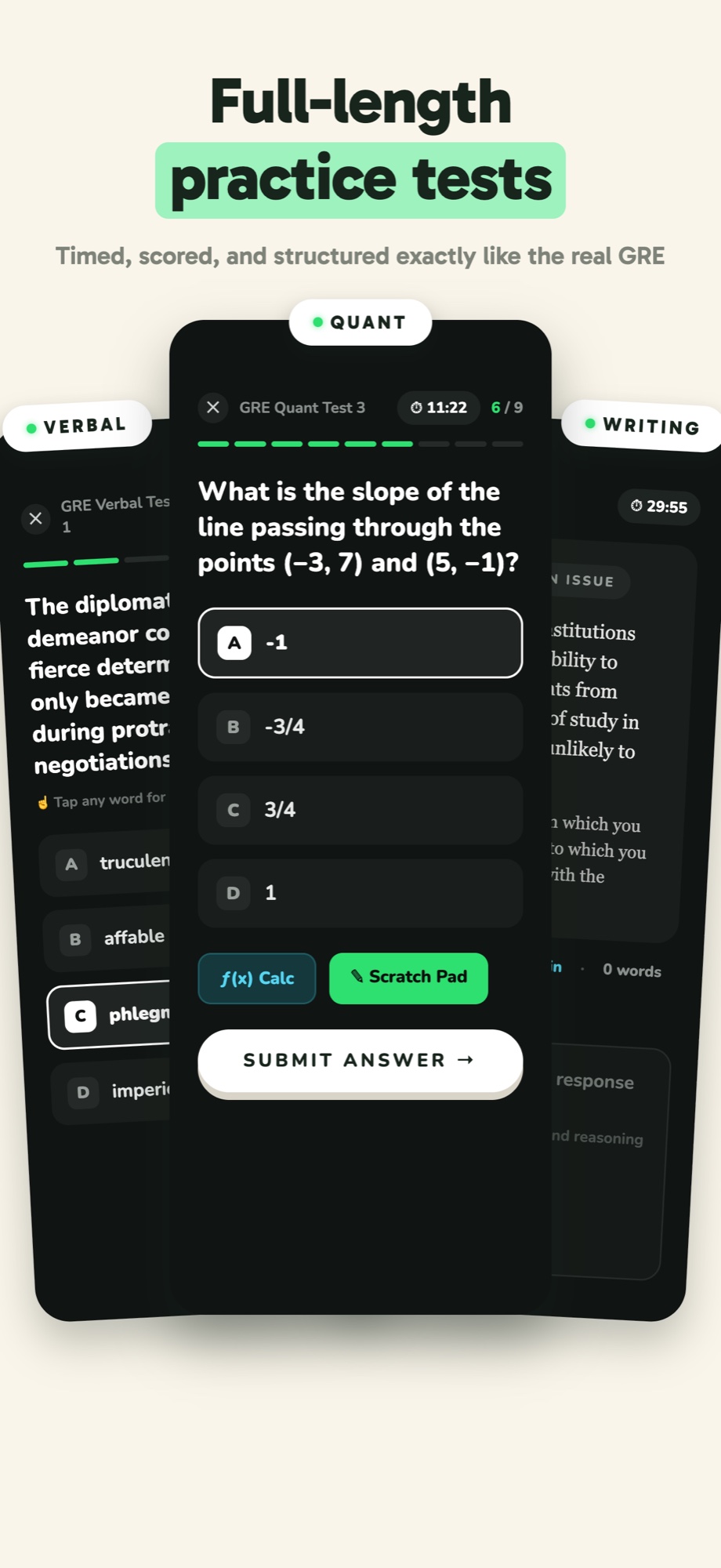
Analytical Writing30 min · 0–6
Verbal Reasoning41 min · 130–170
Quantitative Reasoning47 min · 130–170
Total time~2 hours
What's a good score?
330+Top 2% — MIT, Stanford
320–329Top 10% — highly ranked
310–319Top 25% — strong overall
300–309Meets most minimums
What's actually tested
Every section, broken down.
Quant
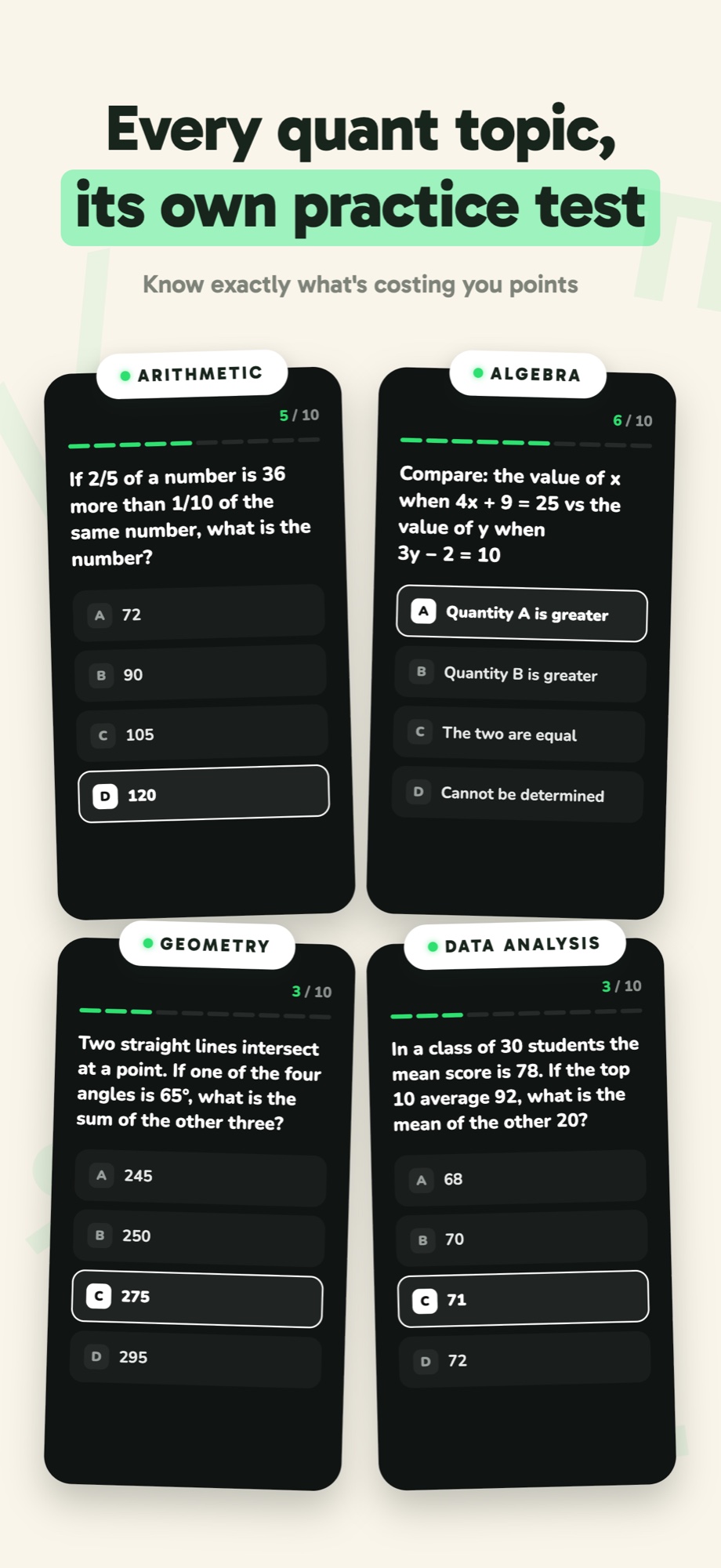
- Arithmetic — percents, ratios, exponents
- Algebra — equations, inequalities, functions
- Geometry — angles, area, volume, coordinates
- Data Analysis — stats, probability, graphs
Verbal
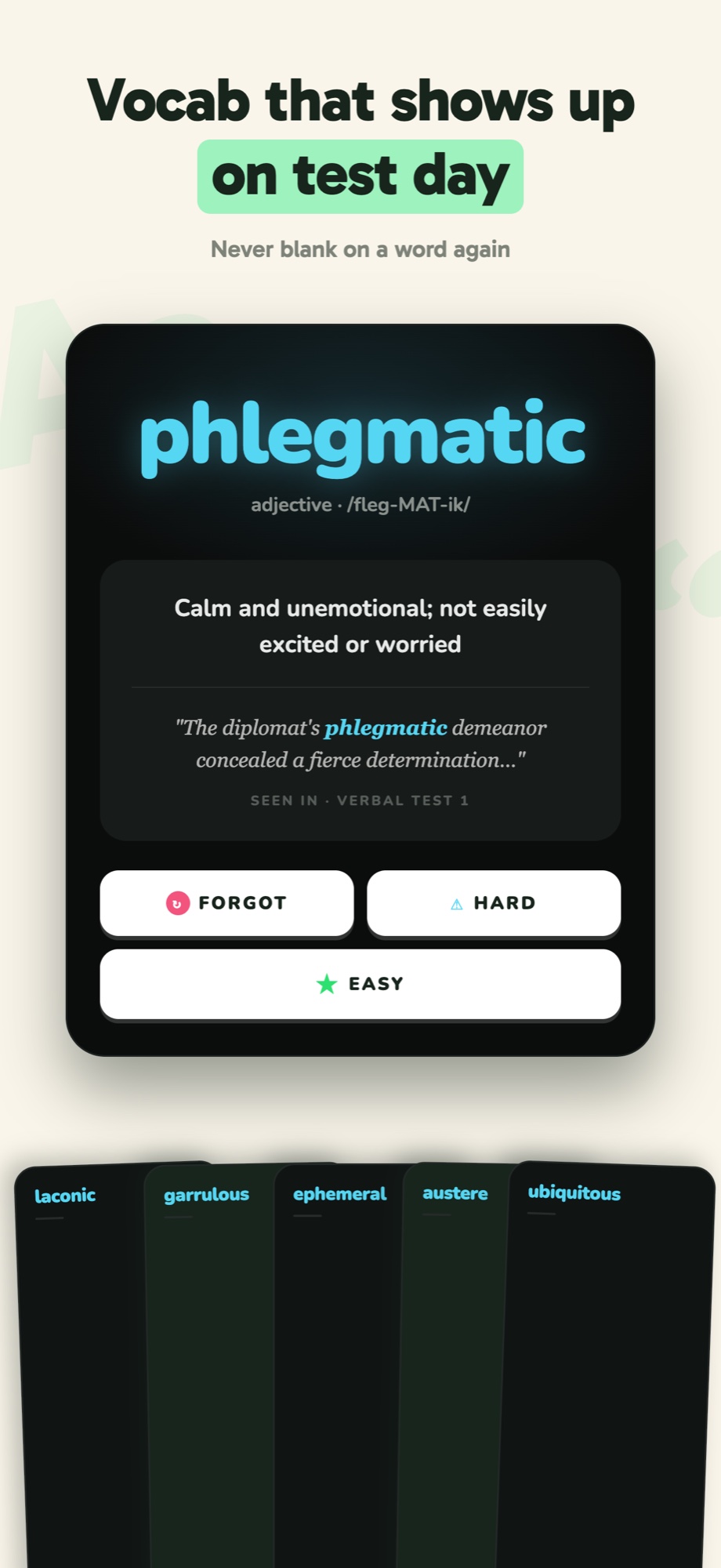
- Text Completion — 1–3 blanks, needs vocabulary
- Sentence Equivalence — pick two, same meaning
- Reading Comprehension — main idea, inference, detail
Writing
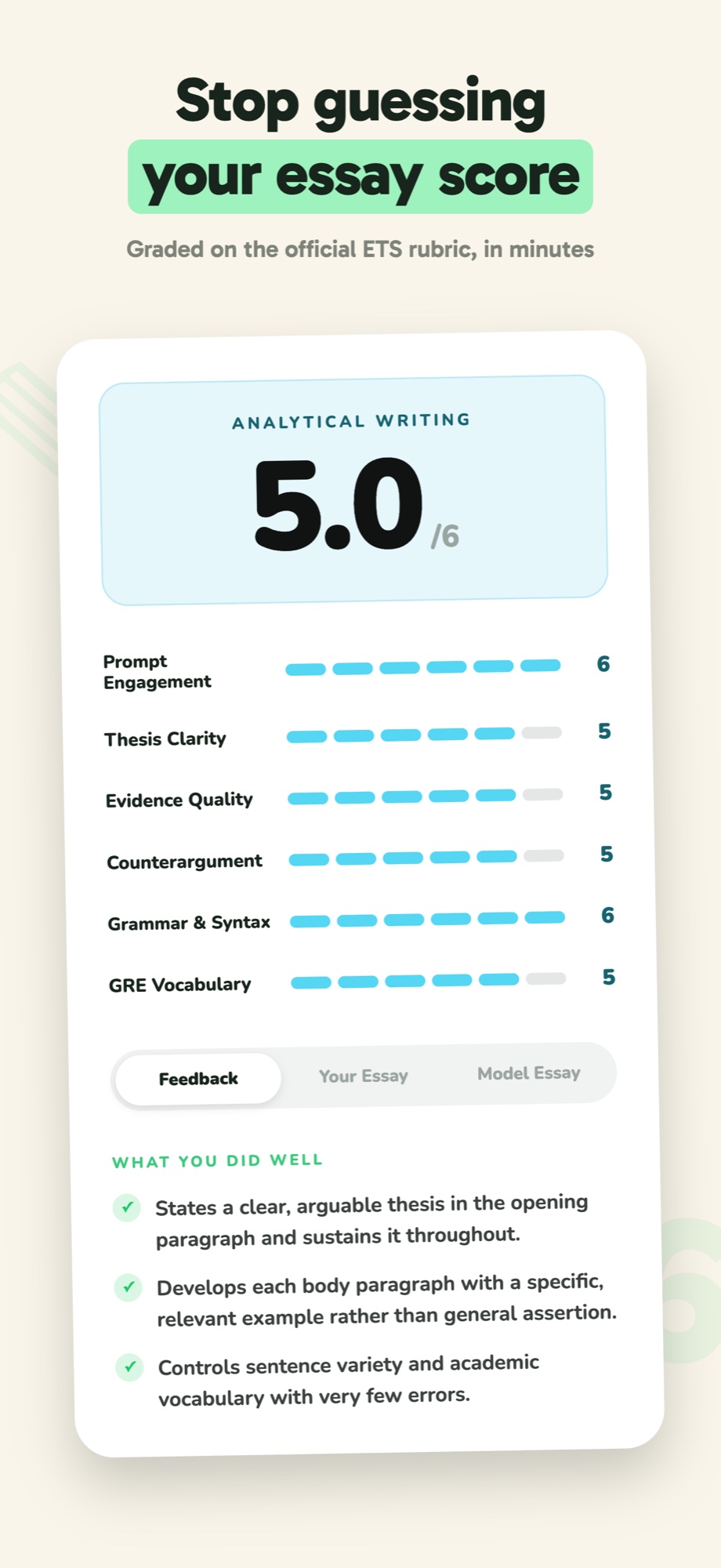
- 1 essay, 30 minutes, Analyze an Issue
- Take a clear position early, don't hedge
- 2–3 concrete examples beat vague ones
- 4.0–4.5 is enough for most programs
Free
$0
1 test/section
Monthly
$14.99/mo
Unlimited, cancel anytime
3 Months
$34.99/3mo
Save 22%
Annual
$129.99/yr
Save 28%
What is the best app for GRE practice tests?+
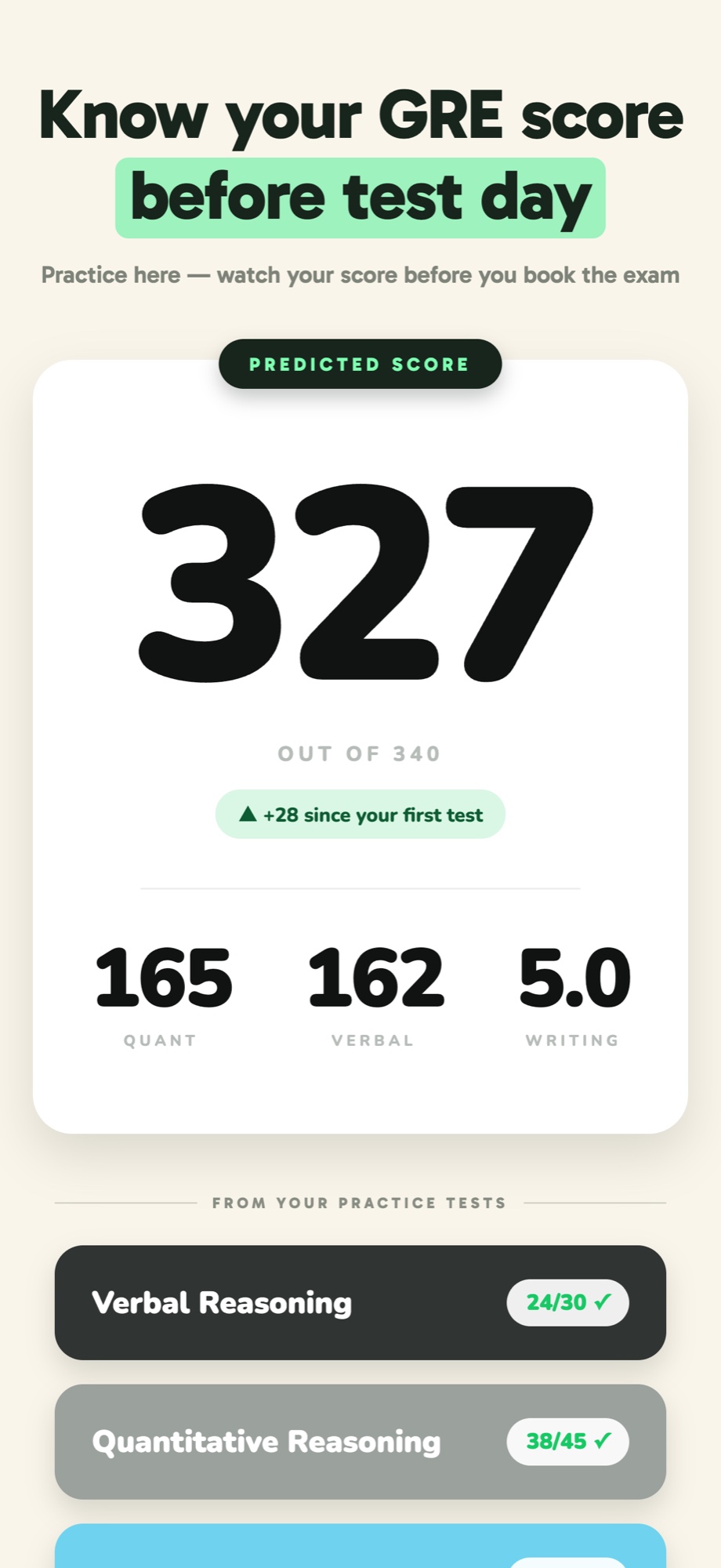
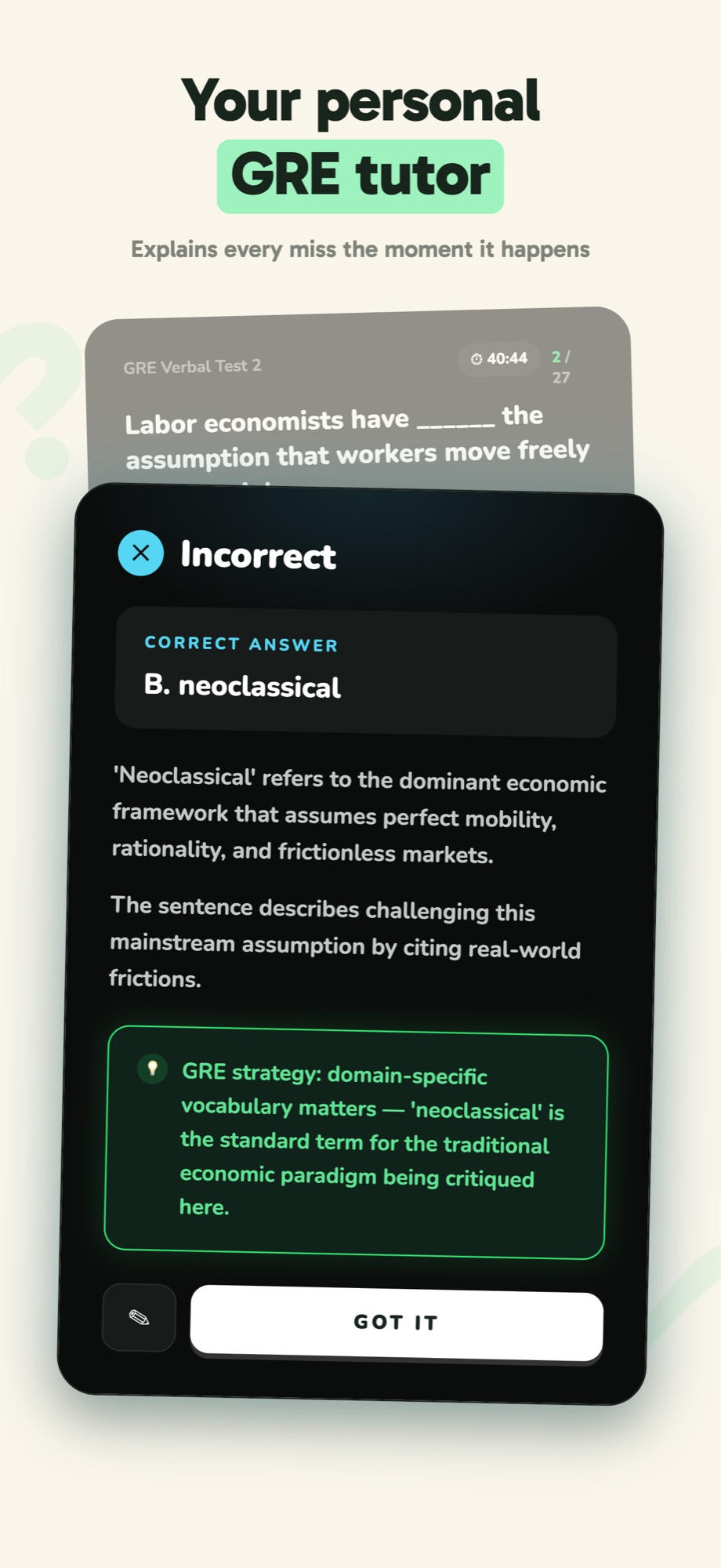
nerzia GRE Prep offers 100+ real-format practice tests covering Quantitative Reasoning, Verbal Reasoning, and Analytical Writing. Questions are designed to match GRE format and difficulty, AI explains every mistake step-by-step, and an estimated 130–170 score updates after every test.
How many GRE practice tests does nerzia have?+
Hundreds of practice questions across Quantitative Reasoning, Verbal Reasoning, and Analytical Writing, plus free topic-specific practice tools for Quant and Verbal that pull fresh questions every round — no signup required to try them.
Is nerzia GRE Prep free?+
Yes — 1 free test per section to start. Premium unlocks unlimited tests, essay grading, and full vocab drills. $14.99/month, or save with the 3-month or annual plan.
Does nerzia predict my real GRE score?+
It gives you an estimated score based on your practice performance, not an official GRE score — useful for tracking your trajectory over time. For the most reliable benchmark, pair it with ETS's official POWERPREP tests before test day.
Is nerzia affiliated with ETS?+
No. nerzia is an independent GRE preparation tool. GRE is a registered trademark of Educational Testing Service (ETS), which does not endorse this app — our questions are designed to match GRE format and difficulty for study purposes.
How is nerzia different from Magoosh or Manhattan Prep?+
Practice-first, not video courses: real tests, instant AI explanations, and live score tracking, starting free. See the full honest comparison of every major GRE app.